What Asia Can Learn from Latin America's Cross-Border Payments Revolution

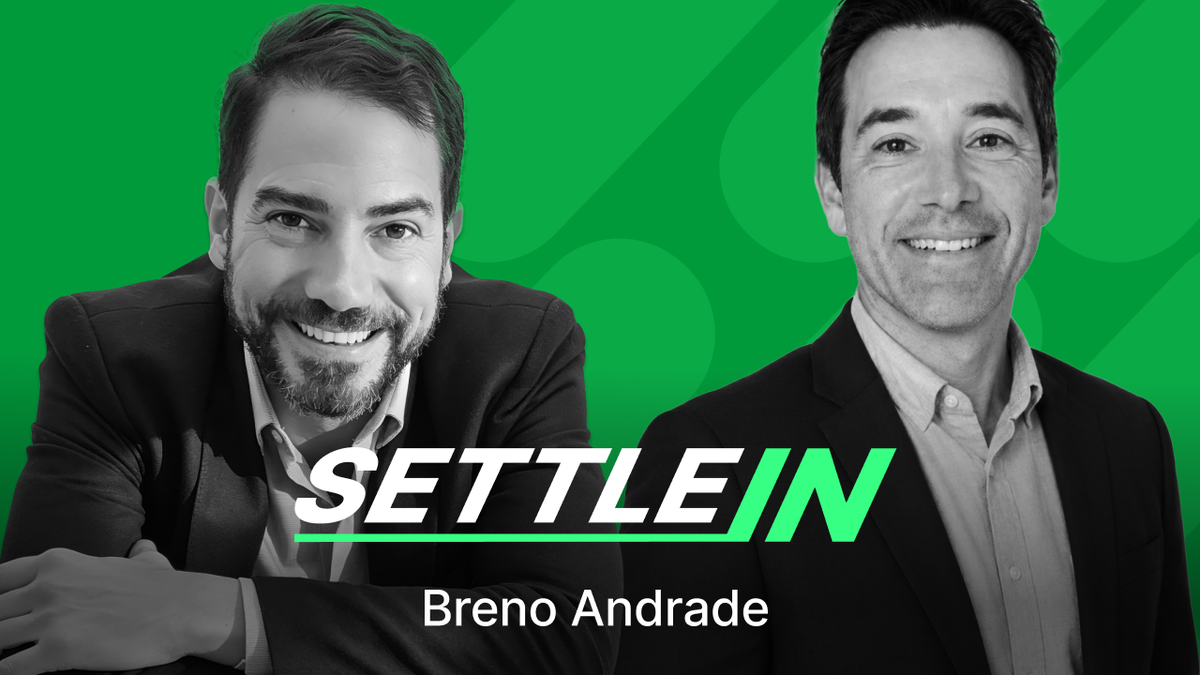
This week Wesley Rios is joined by:
- Breno Andrade, 20+ years in payments, former builder of Visa Direct, Visa, and Mastercard
🎙️ Listen to the latest episode of Settle In! here.
Listen on Spotify | Watch on YouTube
We Cover:
- Why treating Latin America as one region is the fastest way to fail in it
- How Visa Direct emerged from running the card network backwards
- Why cross-border trade payments still behave like a relay race in the dark
- Why remittances reward speed while trade payments reward predictability and where stablecoins fit
- Why Argentina, Bolivia and Brazil adopted crypto and stablecoins for entirely different reasons
- Why interoperability, not technology, decides which payment rails survive
Latin America's 40 Countries Prove One Size Never Fit All
The region gets treated as a single market more often than its payment infrastructure allows. Breno Andrade, who has held regional roles since 2005, described Latin America as a combination of more than 40 countries, each with its own regulator, consumer habits, and technology maturity.
The differences show up everywhere. Brazil built an efficient banking system out of necessity, forged during the hyperinflation era. Chile is conservative and heavily regulated, yet advanced in faster payments. Mexico built one of the world's first real-time payment systems in the early 2000s before real-time payment was even a category and yet remains one of the largest cash-usage markets in the region. Banking concentration varies just as widely: Panama has no dominant bank, while Brazil, Mexico, and Peru are controlled by a handful of incumbents now being pressured by digital banks.
Consumer behavior ties it together. Andrade's view: people don't think about which rail they're using. They want the payment to be frictionless and to work, and usability is what actually drives adoption, not the technology underneath it.
Visa Direct Was Built by Running the Network Backwards
For most of its history, the card network served exactly one use case: consumer-to-business payment, moving in one direction, built for speed and dispute resolution. Visa Direct came from asking what happens if you run that same rail in reverse.
The card network already had to move money back to consumers for refunds and fraud reversals, it just had never been used for that proactively. Andrade said the insight was to flip it: let cardholders receive a payment as a credit, not just send one. Mastercard had a similar product in "push to card," which is how a company like Uber was able to pay drivers instantly rather than on a two-week cycle.
From there it kept expanding. Through acquisitions and in-house builds, the platform grew beyond card credentials into account-to-account transfers with no card involved at all, evolving into a global payment infrastructure now facing pressure from an entirely different set of entrants: stablecoins and digital assets.
Cross-Border Trade Still Runs Like a Relay Race in the Dark
Correspondent banking hasn't kept pace with the rest of digital life. Wesley Rios summed up the experience for a business paying across borders: three to five days, real cost, and almost no visibility once the payment order goes in. His description: "a relay race in the dark."
Andrade's read is that the most developed corridors have improved meaningfully, but the non-traditional, exotic corridors are still absorbing most of the cost, unpredictability, and delay. The gap isn't evenly distributed. It's concentrated exactly where the volume is hardest to serve.
Remittances Reward Speed, Trade Rewards Predictability and That's Where Stablecoins Fit
The two biggest cross-border use cases in Latin America run on different clocks. Remittances are almost entirely inbound: the US is by far the largest sender to the region, and in Mexico, 96–98% of inflows originate there. Speed is the whole game, families need to know the money has landed, often urgently.
Trade is a different animal. Import/export flows are roughly balanced across the region, concentrated in corridors with the US, China, and parts of Europe, and increasingly shaped by trends like Brazilian agribusiness collecting export proceeds locally in Asia. Here, speed isn't the primary driver: cost and predictability are, since large trade payments are typically scheduled well in advance.
That's precisely where Andrade sees stablecoins making a real difference: instant, 24/7 settlement matters more on large, predictable trade payments than it does on time-sensitive remittances, and it's on the trade side where the disruption is happening fastest.
Argentina, Bolivia, and Brazil Are Running Three Different Playbooks
Adoption isn't following one pattern across the region, it's splitting by use case. In Argentina and Bolivia, high inflation and FX volatility pushed consumers toward crypto broadly, mainly as a store of value rather than a payments tool.
Brazil is the outlier on the B2B side. Andrade pointed to a real convergence there: Brazilian importers increasingly settling their bills directly in stablecoins. Three countries, three different reasons for the same underlying shift and Andrade's view is that behavior across the wider region is changing fast enough that this list won't stay short.
Interoperability Beats Technology Every Time
Andrade's closing framework for anyone building payments across a fragmented region: closed-loop ecosystems fail over time, because customers were never thinking about the rail in the first place. They just want the money to arrive, regardless of where it's going. A closed loop that doesn't reach the destination is a disservice to the customer, full stop.
The second lesson is less about the stack than about the room. Technology, in Andrade's experience, is rarely the hardest part, aligning every stakeholder around the same objective is. If each participant is optimizing for its own interest instead of the collective outcome, the product fails regardless of how good the technology is.
His outlook for what comes next isn't one rail winning. It's convergence, traditional payment rails, crypto, and tokenized assets operating alongside each other, at least in the short-to-medium term, which is exactly why he keeps returning to interoperability as the precondition for any of it working.
🎙️ Settle In! Because the future of payments doesn't wait.
🎙️ Listen to the full episode of Settle In! here.