Getting Paid From Abroad: Bank, PayPal, Wise and Stablecoin Fees
The cost of receiving an international payment goes beyond the transfer fee. Here’s how to compare bank transfers, PayPal, Wise and stablecoins—and work out how much of your invoice you actually keep.


TL;DR: Getting paid from abroad can involve transfer fees, processing charges and currency conversion costs. Morph Payments gives businesses a direct way to collect USDC and USDT through payment links, track payments in one dashboard and retain control of their funds. For businesses that receive and spend stablecoins, this can also avoid an intervening conversion into local currency. If you need the money in a bank account, include conversion and withdrawal charges when comparing total costs.
You send a client a $1,000 invoice. They pay it in full. By the time the money reaches your account, the amount available to spend is lower.
Finding out why can take longer than expected. Your client paid a sending fee. An intermediary may have deducted another charge. And the exchange rate used to convert the payment may include a markup.
The total cost of getting paid from abroad depends on the payment method, the countries involved and whether you need to convert the money into local currency. To compare options fairly, look at both what your client pays and what you ultimately receive.
What fees should you check when receiving international payments?
An international payment can involve several separate costs:
Sending fee: What your client pays to initiate the payment
Intermediary fee: Whether another institution deducts money in transit
Receiving or processing fee: What your bank or payment provider charges to accept the payment
Currency conversion: The exchange rate offered and any separate conversion charge
Withdrawal fee: What it costs to move the balance into the account where you need it
Not every payment incurs every charge. Some costs are paid by the sender; others reduce the amount you receive.
Start with a practical question: Do you want to retain the payment in its received currency or asset, or do you need local currency in your bank account?
Those are different outcomes, with different costs.
How much does an international bank transfer cost?
An international bank transfer may involve a sending fee, intermediary deductions, a receiving fee and currency conversion. The total depends on the banks, payment route and fee arrangement.
Before your client sends a payment, confirm who will cover the charges. A fee paid separately by the client increases their cost but does not necessarily reduce your invoice payment.
If conversion is required, ask your bank how much local currency you will receive. A low transfer fee does not tell you whether the exchange rate is competitive.
For a $1,000 invoice, compare:
- The client’s total debit, including sending charges.
- The amount that reaches your account.
- The amount available after any conversion or withdrawal.
Use a current quote for the relevant route rather than assuming one percentage applies to all international wires.
How much does PayPal charge to receive money from abroad?
PayPal’s commercial payment fees depend on the recipient’s account market, the transaction type and whether currency conversion is required.
For example, PayPal’s published Vietnam merchant fee schedule, dated 28 May 2026, lists a rate of 4.40% plus a fixed fee for receiving international commercial transactions. The fixed fee for a payment received in US dollars is $0.30.
For a $1,000 commercial payment received in USD:
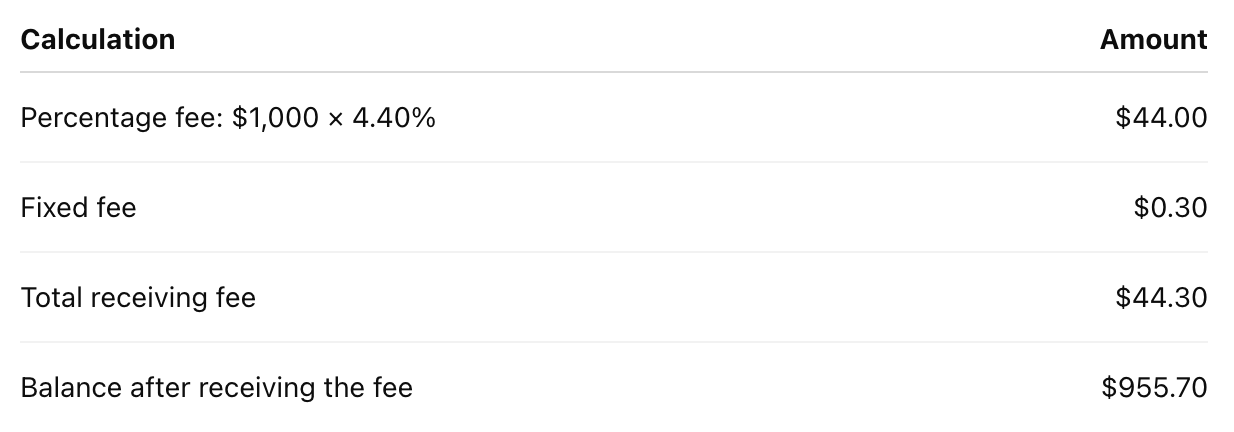
This calculation excludes any applicable currency conversion or withdrawal charges. It is a Vietnam-specific example, not a universal PayPal rate.
Check the schedule for your account’s country and review the conversion quote before estimating your final proceeds.
Source: PayPal Vietnam merchant fee schedule
Is Wise a lower-cost way to receive international payments?
Wise is worth including in your comparison, particularly when currency conversion is involved. Whether it is the lowest-cost option depends on the currencies, payment route, funding method and services available in your country.
Wise Business also supports payment requests through payment links. Customers can use the link to pay, with funds deposited into the business’s Wise account. Check eligibility and available payment methods for your market.
Source: Wise Business payment links
For a fair comparison, use a current quote and establish who pays each charge. Check the cost of receiving the money, converting it and transferring it to your local bank account if needed.
What do stablecoin payments cost?
Stablecoin payments allow clients to send assets such as USDC or USDT to a compatible receiving wallet. The blockchain network fee is one part of the cost.
Depending on how the payment is funded and received, the complete journey may also involve:
- Buying or converting funds into stablecoins.
- Withdrawing stablecoins from an exchange.
- Payment-platform charges.
- Converting stablecoins into local currency.
- Withdrawing local currency to a bank account.
A small network fee does not, by itself, establish the total cost of getting paid.
The distinction matters for businesses that can retain or use stablecoins. If you receive USDC and later use it to pay a supplier who accepts USDC, you may avoid an intervening conversion into local currency.
If you need the money in a local bank account, include the conversion and withdrawal costs before comparing it with a bank transfer, PayPal or Wise.
A USDC or USDT balance is a stablecoin holding, not a US-dollar bank deposit.
How do you compare payment methods fairly?
Use the same invoice amount, destination and final currency for every quote.
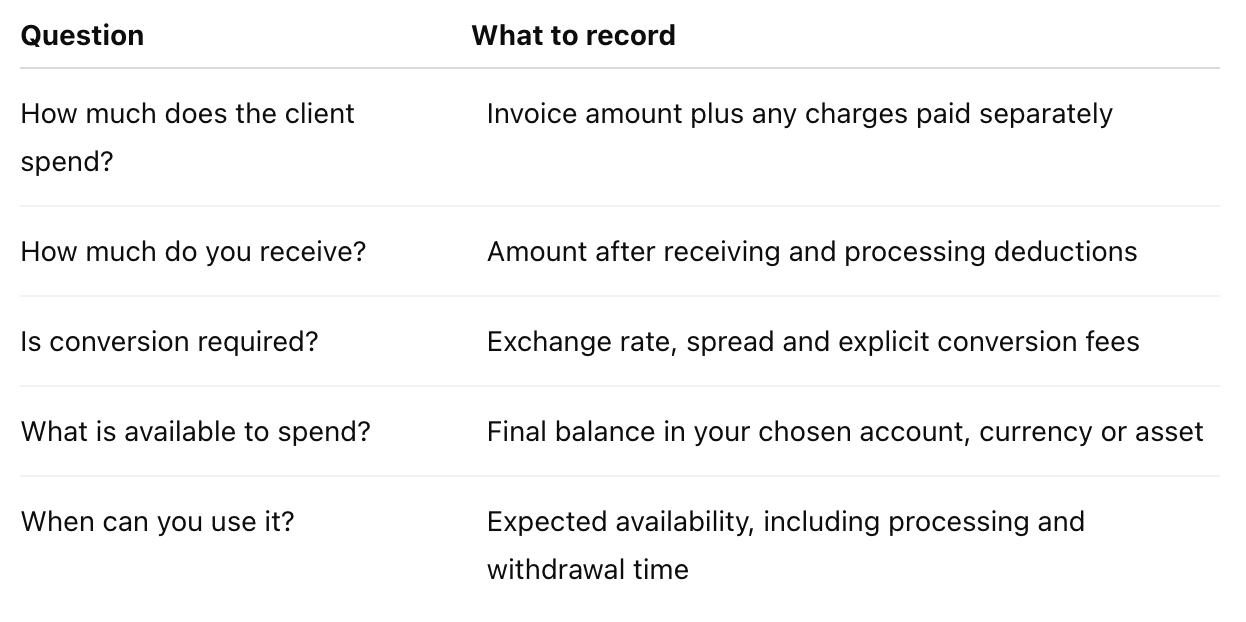
Keep the quote date alongside your figures. Fees and exchange rates can change, and an estimate for one payment route should not be presented as a universal price.
Where does Morph Payments fit?
Morph Payments is a non-custodial stablecoin payments platform for businesses, freelancers and globally distributed organisations.
Businesses can use Morph Payments to collect stablecoin payments through payment links and track payment activity in a dashboard. The platform does not hold customer funds.
For agencies and consultants whose clients already use stablecoins, this provides another way to collect international invoice payments. Businesses that also pay collaborators in stablecoins can consider their incoming and outgoing payments together.
Read our guide to paying freelancers and agencies with stablecoins.
Frequently asked questions
What is the cheapest way to get paid by an overseas client?
There is no single cheapest method for every payment. Compare current quotes for the same invoice amount and final currency, including receiving, conversion and withdrawal charges.
Why did I receive less than the amount on my invoice?
Processing fees, intermediary deductions, receiving charges or currency conversion may explain the difference. Check the transaction breakdown and confirm which charges your client agreed to cover.
Are stablecoin payments free?
Not necessarily. Network, exchange, platform and conversion charges may apply. Check the full payment journey rather than treating the blockchain fee as the total cost.
Can I receive stablecoins and convert them into local currency?
That depends on the services available to you and their eligibility requirements. Compare supported assets and networks, conversion rates, fees and bank withdrawal options before choosing a route.
Make the cost of getting paid visible
For your next overseas invoice, ask each provider the same question: how much will my client pay, and how much will I have available to spend?
If your clients already use USDC or USDT, explore Morph Payments or book a demo to see how stablecoin collections could fit your business.