Stablecoin Payment Processing: How It Works
Key Takeaways
- Stablecoin payment processing enables fast, borderless transactions with significantly lower blockchain payment costs compared to traditional systems.
- Compared to SWIFT, blockchain settlement is faster, cheaper, and operates 24/7, making it a compelling alternative for global payments.
- A modern blockchain payment solution streamlines merchant acceptance, treasury settlement, and cross-border transfers using stable digital currencies.
- Innovations like the Morph payment accelerator are improving scalability, reducing latency, and further lowering costs, accelerating adoption of stablecoin-based payment infrastructure.
Introduction: The Rise of Stablecoin Payment Processing
Global payments are evolving rapidly. Traditional systems like bank wires and SWIFT have long dominated international transactions, but they come with high fees, slow settlement times, and limited operating hours. As digital finance grows, businesses and financial institutions are exploring alternatives that are faster, cheaper, and more efficient.
Stablecoins—digital currencies pegged to stable assets such as the US dollar—have emerged as a foundational layer for modern payment infrastructure. Unlike volatile cryptocurrencies, stablecoins maintain predictable value, making them suitable for real-world financial transactions. When combined with blockchain networks, stablecoins enable near-instant settlement, reduced intermediaries, and global accessibility.
This is where stablecoin payment processing comes into play. It refers to the systems and infrastructure that enable businesses, platforms, and institutions to send, receive, and settle payments using stablecoins. With lower blockchain payment costs, faster processing, and greater transparency, stablecoin-based payment systems are transforming global commerce.
This guide explains how stablecoin payment processing works, compares blockchain vs SWIFT cost, explores the role of modern blockchain payment solutions, and examines how innovations like the Morph payment accelerator are shaping the future of digital payments.
What Is Stablecoin Payment Processing?
Stablecoin payment processing is the mechanism by which payments made in stablecoins are accepted, validated, and settled on blockchain networks. It functions similarly to traditional payment processing but removes many intermediaries.
In a typical payment flow:
- A sender initiates a payment using stablecoins.
- The transaction is broadcast to a blockchain network.
- Validators confirm and record the transaction.
- Funds are settled and received in minutes or seconds.
Unlike traditional banking rails, settlement happens directly on-chain, reducing complexity and cost.
Stablecoin payment processing typically involves:
- Digital wallets
- Blockchain networks
- Payment gateways
- Liquidity providers
- Settlement infrastructure
Together, these components form a complete blockchain payment solution.
Why Stablecoins Are Ideal for Payment Processing
Stablecoins combine the benefits of fiat currency stability with blockchain efficiency.
Price Stability
Stablecoins are pegged to fiat currencies, making them suitable for pricing goods, paying invoices, and settling transactions.
Fast Settlement
Payments settle within seconds to minutes instead of days.
Lower Blockchain Payment Costs
With fewer intermediaries, transaction costs are significantly lower.
Borderless Transfers
Stablecoins can be sent globally without currency barriers.
Transparency
Blockchain provides verifiable transaction records.
How Stablecoin Payment Processing Works (Step-by-Step)
Step 1: Payment Initiation
A user or business initiates a payment via wallet, payment gateway, or API. The payment amount is denominated in stablecoins.
Step 2: Transaction Broadcasting
The transaction is submitted to a blockchain network and enters the validation queue.
Step 3: Validation and Confirmation
Validators verify the transaction and include it in a block. Depending on the network, confirmation takes seconds to minutes.
Step 4: Settlement
Once confirmed, funds are considered settled. The recipient gains immediate access to funds.
Step 5: Optional Conversion
Recipients can hold stablecoins or convert to fiat currency via exchanges or payment providers.
Blockchain Payment Costs Explained
One of the biggest advantages of stablecoin payment processing is lower blockchain payment costs.
Costs typically include:
- Network transaction fees
- Conversion fees (optional)
- Gateway processing fees
Compared to traditional payment systems, blockchain costs are often significantly lower.
Blockchain vs SWIFT Cost Comparison
Understanding blockchain vs SWIFT cost highlights the economic advantage of stablecoin payments.
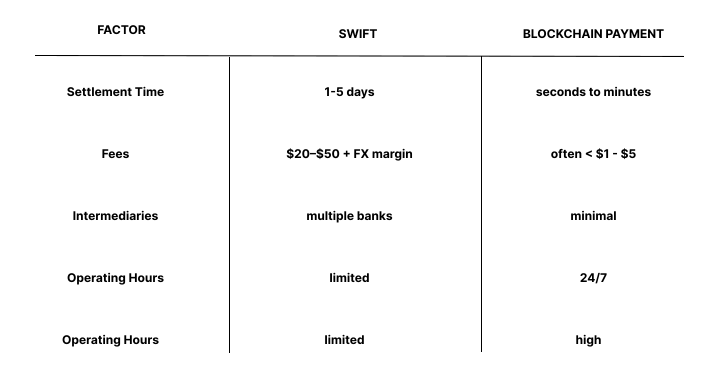
SWIFT relies on correspondent banking networks, adding costs and delays. Blockchain settlement happens directly, reducing fees and improving efficiency.
Components of a Blockchain Payment Solution
A complete blockchain payment solution includes several layers.
Wallet Infrastructure
Allows users and businesses to store and manage stablecoins securely.
Payment Gateway
Facilitates merchant acceptance and transaction routing.
Liquidity Layer
Enables conversion between stablecoins and fiat.
Settlement Engine
Processes and confirms payments on-chain.
Compliance Layer
Ensures adherence to regulatory and KYC/AML requirements.
Role of the Morph Payment Accelerator
Scalability and cost efficiency are critical for blockchain payment adoption. The Morph payment accelerator is designed to enhance blockchain payment processing by improving transaction throughput, reducing latency, and lowering operational costs.
Key benefits include:
- Faster transaction confirmation
- Reduced congestion and fees
- Improved payment scalability
- Lower blockchain payment costs
- Enhanced performance for payment infrastructure
By optimizing transaction processing, Morph accelerates real-world adoption of stablecoin-based payment systems.
Use Cases of Stablecoin Payment Processing
Cross-Border Payments
Stablecoins enable fast and low-cost international transfers.
Merchant Payments
Businesses can accept stablecoins with lower fees and faster settlement.
Treasury Settlement
Organizations can move capital globally in real time.
Payroll and Gig Economy
Companies can pay global workers instantly.
B2B Payments
Stablecoins streamline invoice settlement and reduce FX friction.
Security and Compliance
Security and compliance are critical in payment processing.
Best practices include:
- Secure wallet custody
- Multi-signature authorization
- Regulatory compliance
- Transaction monitoring
- Risk management
Challenges in Stablecoin Payment Processing
Despite advantages, challenges include:
- Regulatory fragmentation
- Liquidity in certain regions
- Network congestion during peak usage
- Custody and security risks
- Integration complexity
Continuous innovation is addressing these issues.
The Future of Blockchain Payment Solutions
Stablecoin payment infrastructure is evolving rapidly.
Future developments include:
- Deeper integration with traditional finance
- Programmable payments via smart contracts
- Real-time global settlement
- Lower blockchain payment costs at scale
- Enterprise adoption
Conclusion
Stablecoin payment processing represents a major shift in global payments. By leveraging blockchain infrastructure, businesses can reduce costs, accelerate settlement, and operate globally without traditional banking constraints. Compared to SWIFT, blockchain offers faster settlement, lower fees, and greater transparency.
Modern blockchain payment solutions, supported by innovations like the Morph payment accelerator, are making stablecoin payments more scalable, efficient, and cost-effective. As infrastructure matures, stablecoins are poised to become a core component of global financial systems.