Merchant Guide: Accepting Stablecoin Payments
Key Takeaways
- Stablecoin payments enable fast, borderless, and low-cost transactions, helping merchants reduce fees and access global customers without relying on traditional banking infrastructure.
- Blockchain payments provide near-instant settlement and transparency, improving cash flow and reducing delays compared to traditional payment systems.
- Lower payment settlement cost is one of the biggest advantages, as stablecoins eliminate many intermediary and foreign exchange fees.
Merchants across e-commerce, SaaS, retail, and global services are adopting stablecoin payments, gaining operational efficiency, faster settlements, and expanded market reach.
Introduction: Why Merchants Are Turning to Stablecoin Payments
The global payments landscape is undergoing a significant transformation. For decades, merchants have relied on traditional payment systems such as credit cards, bank transfers, and international remittance networks. While these systems are widely used, they come with high transaction fees, delayed settlements, and complex cross-border processes.
Today, stablecoin payments are emerging as a powerful alternative, enabling merchants to accept digital payments that are fast, borderless, and cost-efficient. Powered by blockchain infrastructure, stablecoins maintain stable value—typically pegged to fiat currencies such as the US dollar—while offering the speed and transparency of digital assets.
With the rise of blockchain payments, merchants can now accept global payments without relying heavily on traditional banking systems. This reduces friction, improves cash flow, and significantly lowers payment settlement cost. From e-commerce platforms to global SaaS providers, businesses are increasingly integrating stablecoin payments into their payment stack.
This guide explores everything merchants need to know about accepting stablecoin payments—from benefits and setup to risks, compliance, and future trends.
What Are Stablecoin Payments?
Stablecoin payments refer to transactions made using digital currencies that are pegged to stable fiat currencies. Unlike volatile cryptocurrencies, stablecoins are designed to maintain consistent value, making them suitable for everyday commerce.
Most stablecoins are backed by fiat reserves or cash-equivalent assets, ensuring price stability and liquidity. This stability makes them ideal for blockchain payments, particularly for merchants seeking predictable transaction values without exposure to crypto volatility.
When customers pay using stablecoins, transactions are recorded on blockchain networks, enabling near-instant settlement and transparent tracking. For merchants, this translates into faster access to funds and reduced reliance on traditional payment processors.
Why Merchants Are Adopting Stablecoin Payments
Merchants across industries are adopting stablecoin payments for several compelling reasons.
Lower Payment Settlement Cost
Traditional payment systems involve multiple intermediaries—banks, card networks, processors, and currency converters. Each layer adds fees. Stablecoins remove many of these intermediaries, significantly reducing payment settlement cost.
For example:
- Credit card processing fees: 2–4%
- International bank transfer fees: $20–$50 + FX margin
- Stablecoin transaction fees: Often less than 1%
Over time, this reduction can lead to substantial savings for merchants.
Faster Settlement and Improved Cash Flow
Traditional payments can take days to settle, especially for cross-border transactions. Blockchain payments settle within minutes or seconds, giving merchants immediate access to funds. Faster settlement improves liquidity and allows businesses to reinvest capital quickly.
Access to Global Customers
Stablecoins operate on global blockchain networks. Merchants can accept payments from customers anywhere without worrying about currency barriers or banking limitations. This is particularly valuable for e-commerce, SaaS, freelancers, and global service providers.
Reduced Chargeback Risk
Unlike credit card transactions, stablecoin payments are typically irreversible once confirmed on blockchain. This reduces fraud and eliminates costly chargeback disputes.
24/7 Payment Infrastructure
Blockchain networks operate continuously, unlike traditional banking systems. Merchants can receive payments anytime, including weekends and holidays.
How Stablecoin Payments Work for Merchants
Accepting stablecoin payments involves several steps.
- A customer selects stablecoin as the payment method.
- The merchant generates a wallet address or payment request.
- The customer sends stablecoins from their wallet.
- The transaction is confirmed on blockchain.
- The merchant receives funds instantly.
Merchants can either hold stablecoins, convert them to fiat, or use them for operational expenses.
Payment Settlement Cost Comparison
One of the strongest motivations for adopting stablecoin payments is reducing payment settlement cost.
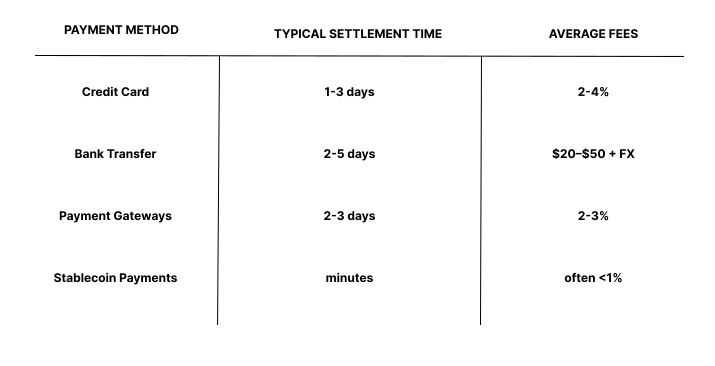
Lower settlement costs can dramatically improve merchant margins, particularly for high-volume businesses.
Use Cases for Stablecoin Payments
Stablecoin payments are increasingly used across industries.
E-commerce
Merchants can accept global payments without currency barriers, reduce fees, and avoid chargebacks.
SaaS and Subscriptions
Recurring payments can be automated using blockchain payments, reducing processing costs and improving efficiency.
Freelancers and Digital Services
Stablecoins enable fast international payments without costly remittance fees.
Global B2B Payments
Businesses can settle invoices quickly and reduce FX conversion costs.
Emerging Markets
Merchants in regions with unstable currencies can accept stablecoins to protect value.
How to Start Accepting Stablecoin Payments
Step 1: Choose Supported Stablecoins
Select widely used and liquid stablecoins supported by your payment infrastructure.
Step 2: Set Up a Digital Wallet
Merchants need secure wallets to receive stablecoin payments.
Step 3: Integrate a Payment Gateway
Crypto payment gateways simplify checkout, invoicing, and conversion.
Step 4: Enable Settlement Strategy
Merchants can:
- Hold stablecoins
- Convert to fiat automatically
- Use for treasury and operations
Step 5: Ensure Compliance
Follow local regulations and implement KYC/AML practices where required.
Security Best Practices
To protect funds and operations:
- Use secure wallet custody solutions
- Enable multi-signature security
- Use hardware wallets for treasury storage
- Educate staff on phishing and wallet security
Challenges and Risks
Despite advantages, merchants should consider:
- Regulatory differences across jurisdictions
- Price peg risks in extreme conditions
- Off-ramp liquidity in some regions
- Blockchain network congestion
- Compliance and tax implications
Proper planning and infrastructure can mitigate these risks.
The Future of Stablecoin Payments for Merchants
The adoption of stablecoin payments is accelerating.
Future developments include:
- Deeper integration with traditional payment systems
- Programmable payments via smart contracts
- Real-time global settlement infrastructure
- Lower payment settlement cost at scale
- Wider adoption by enterprise merchants
Stablecoins are expected to become a core component of modern payment infrastructure.
Conclusion
Stablecoin payments are transforming how merchants accept and settle payments globally. By leveraging blockchain payments, businesses can reduce fees, accelerate settlement, and access a global customer base. Lower payment settlement cost, faster liquidity, and borderless transactions make stablecoins an attractive alternative to traditional payment systems.
While challenges remain, rapid innovation and infrastructure development continue to improve usability and adoption. Merchants who embrace stablecoin payments today position themselves at the forefront of the next generation of global commerce—one that is faster, cheaper, and truly borderless.